Follow the Credit System Step-by-Step
Why Your Credit Score Won’t Improve (Even When You’re Doing Everything Right) — The Patterns Most People Miss
Struggling to improve your credit score even when you’re doing everything right? Discover the hidden spending and behavior patterns quietly keeping you stuck—and how to finally break them.
CreditPatterns.com
4/13/20267 min read

It Was Never Just the Balance: The Credit Patterns Quietly Running Your Life
There’s a moment that happens for a lot of people, and it almost always happens in private.
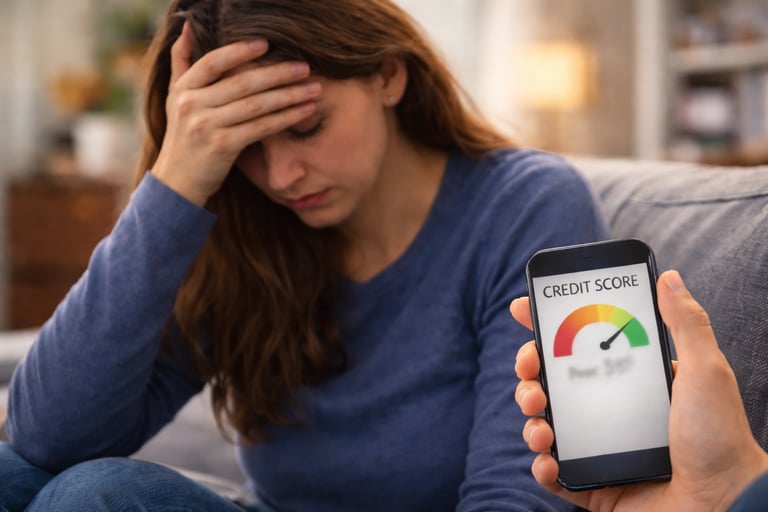
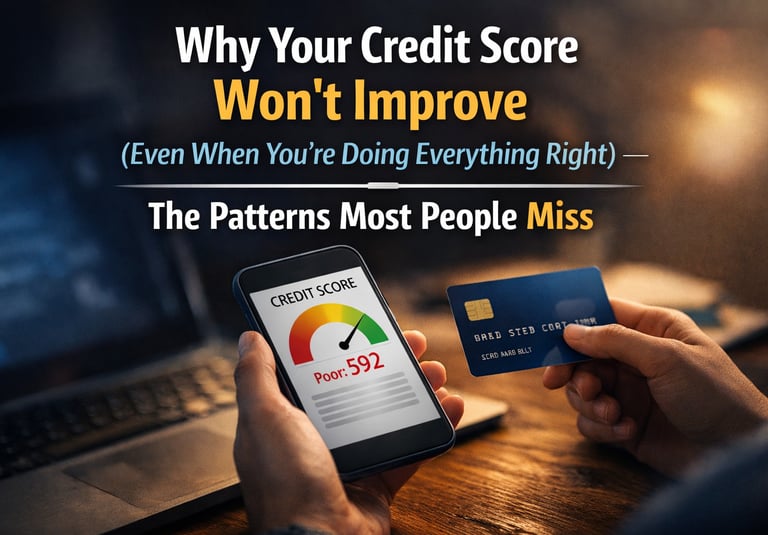
The house is finally quiet. The day has stopped demanding things from you. You’re alone with your phone, thumb hovering over the banking app you already dread opening.
You hesitate for a moment longer than you expect, and that pause alone tells you more than the number ever will.
If you’ve ever wondered why your credit score won’t improve or why your financial habits keep repeating, this is usually where it starts.
Deep down, you already know the number will tighten your chest in that small, familiar way. Not catastrophic. Just bad enough to make you promise yourself — again — that next month will be different. That this time you’ll finally get it under control.
And then, because facing it feels heavier than the shame of avoiding it, you close the app.
And that’s the part nobody really talks about — not the debt itself, or the credit score, or even the overspending, but the avoidance underneath it all, the quiet flinch that makes you turn away and promise yourself you’ll deal with it tomorrow.
Most people think their problem is money. They chase better budgets, stricter rules, or systems that last a few days before real life crashes back in. They blame spending too much, earning too little, or never learning the “right” way to manage credit.
Sometimes those things are true.
But if it were only about math or willpower, more people would already be free. This is why so many people struggle to improve their credit score even when they’re technically doing the “right” things.
What keeps most people stuck isn’t just the debt.
It’s the pattern.
A pattern doesn’t feel dramatic when you’re living inside it. It feels like ordering takeout because you’re exhausted, putting one more thing on the card because payday feels close enough, or avoiding the app entirely because you don’t want to feel worse tonight.
Nothing looks like a disaster in the moment. That’s what makes it dangerous. Because by the time it finally feels serious… it’s already been happening for months, sometimes years.
If you slow down and look closely, the signs are already there. You check your balance less when you suspect it’s bad. Spending creeps in after stressful days or quiet, lonely evenings. You start each month with intention, and somewhere along the way, it quietly slips. The shame starts to feel heavier than the numbers themselves. And even though you keep telling yourself this month will be different… nothing really changes.
That was the part Lena finally understood.
For years she thought she had a “spending problem.” She was in her thirties, responsible on the outside, but quietly exhausted on the inside. Balances that rose and fell like tides. A credit score that refused to move no matter how many times she swore this was the month she’d fix it. The constant low-grade anxiety that followed her into grocery stores, dinner plans, and Sunday nights — because everything felt one unexpected bill away from collapsing.
She didn’t feel reckless so much as she felt exhausted — exhausted from thinking about money, from fixing the same problem over and over, and from quietly blaming herself for something she didn’t fully understand.
Every month started with intention. She’d open her laptop, move money around, download another app, and feel briefly in control. Then a rough week would hit. A stressful conversation. A moment of boredom or emotional depletion. A few “small” purchases that seemed harmless. And suddenly she was back at the starting line, except now shame had joined the cycle.
The worst part wasn’t the number on the screen.
Over time, what this really steals isn’t just money or options — it’s your sense of self-trust.
If that feels familiar, you’re not failing because you don’t care enough. You’re likely stuck because you’ve been attacking the symptom instead of the system producing it.
Lena’s turning point came the night she opened her account, saw the balance, and — instead of spiraling — asked a different question:
Not “Why am I like this?” But “When do I usually do this?” And for the first time, it felt like an honest question… not a judgment.
This is also why so many people struggle to improve their credit score even when they’re doing what seems like the “right” things. This is the hidden reason so many people feel stuck trying to fix bad credit habits that never seem to change.
That’s usually the moment people start realizing… this isn’t about fixing money. It’s about finally understanding what’s been happening all along.
Once she stopped moralizing and started observing, the pattern came into focus. She spent more at night. More after hard workdays. More when she was soothing discomfort she didn’t want to name. She avoided checking balances precisely when things were worst.
Nothing magically erased her debt that night, but for the first time, her financial life stopped feeling random.
When chaos becomes visible as a pattern, you can finally work with it instead of against it.
If you’ve ever tried to understand why your credit score moves the way it does and felt like it never quite made sense, the Credit Scoring Education Framework explains the system in a way that finally makes it feel predictable instead of frustrating. Or, if you’ve ever felt confused by how your score moves, looking into Credit Score Changes & Fluctuations or Why Your Credit Score Changes can help make those shifts feel a lot less random.
Once Lena saw her pattern, the changes were almost boring. Which is why they stuck. No dramatic overhauls. Just small, kind interruptions: no spending decisions after 9 p.m., checking balances in the calm light of morning instead of emotional depletion at night, turning off shopping emails, and creating a pause between urge and action.
Over time, the credit score she used to obsess over began to move — not because she forced it, but because something deeper was healing.
Most advice misses this entirely. It tells you tactics to improve your credit score, but not how to become the kind of person who can actually sustain those behaviors.
To go deeper into the mechanics behind the numbers, explore Credit Utilization and Credit Card Behavior, Payment History & Delinquency Patterns, or Credit Scoring Models.
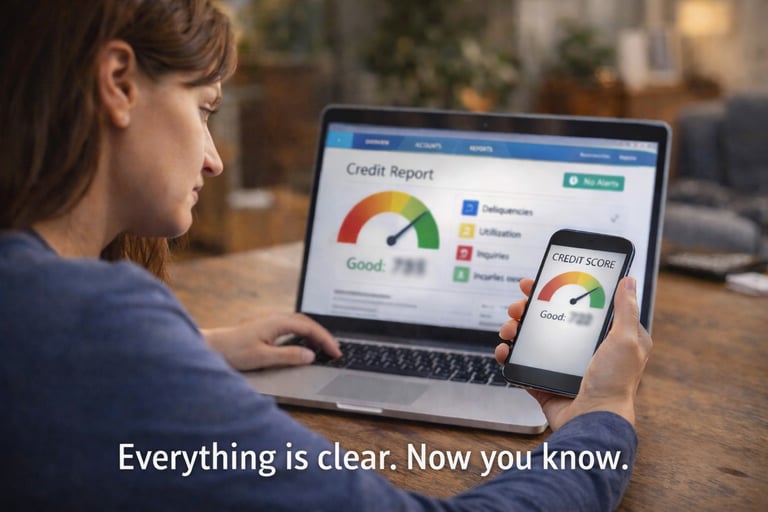
But awareness alone isn’t always enough if you still don’t want to look. For a lot of people, the shift begins the moment they no longer have to guess. A simple credit monitoring tool: mySCOREIQ (Affiliate Disclosure) can take that late-night uncertainty and turn it into something steady and understandable… something you don’t feel the need to avoid anymore.
Because in the end, that late-night moment with your phone in your hand was never really about the app.
It was about the pause before it. The fear. The shame. The resistance. The quiet hope that maybe this time it will be different.
Nothing about that moment actually changes — the room is still quiet, the screen still glows, and you’re still standing in the same place you’ve been before — but now you understand what’s happening inside it, and once you see the pattern clearly enough, you don’t go back to living inside it the same way again, because it finally makes sense in a way it never did before.
Frequently Asked Questions
Once people start paying attention to their patterns instead of avoiding them, these are the questions that usually come next:
Why does my credit score keep changing even when I’m trying to do everything right? Credit scores fluctuate due to timing of payments, credit utilization levels, new inquiries, and how credit bureaus update reports. Understanding these credit score changes and fluctuations helps you see the predictable patterns instead of feeling like it’s random.
Is my spending the main reason my credit score won’t improve? Spending is only part of the picture. Payment history, credit utilization ratios, and how long accounts have been open often have bigger impacts. See the full breakdown in the Credit Scoring Education Framework and Credit Utilization and Credit Card Behavior.
How can I stop avoiding my credit card balances and banking apps? Avoidance usually comes from emotional discomfort. Start with small, consistent habits like checking balances at the same calm time each day. Tools that make monitoring less stressful can help break the cycle.
What’s the difference between a credit score and a credit report? Your credit report contains the raw data (payment history, balances, accounts). Your credit score is a calculated number based on that data using different scoring models. Learn the exact mechanics in Credit Data Reporting & Structure.
Can emotional spending or stress really damage my credit long-term? Yes. Repeated emotional decisions often lead to higher utilization, missed payments, or avoidance that hurts your score over time. Recognizing these patterns is the first step toward lasting change.
Do I need a perfect credit score to fix my financial life? No. Many people see real progress by focusing on consistent, sustainable habits rather than chasing perfection. The goal is building trust in your own decisions, not hitting a perfect number.
How long does it typically take to see improvement in a credit score? Positive changes can appear in 30–60 days with consistent behavior (on-time payments and lower utilization), but deeper improvements often take 3–6 months or more depending on your starting point and credit history length.
What’s the best way to monitor my credit without feeling overwhelmed? Choose a tool that provides clear, gentle updates rather than constant alerts. Regular, low-stress visibility helps interrupt avoidance patterns and makes the numbers feel manageable instead of punishing.
Is it too late to improve my credit if I have years of bad patterns? It’s never too late. Credit scoring models reward recent positive behavior. Starting with awareness of your patterns and consistent small actions can lead to meaningful improvement over time.
How do credit patterns actually affect my daily life beyond the score? Poor credit patterns can limit loan approvals, increase interest rates, raise insurance premiums, and create constant low-level stress. Breaking the cycle improves both your numbers and your peace of mind.