Follow the Credit System Step-by-Step
Educational content only. Not credit repair advice or services. No guarantees made. See full Disclaimer
Credit Monitoring & Credit Tools Framework
This page is part of the Credit Patterns Framework — a step-by-step system designed to explain how credit scores are calculated, interpreted, and updated over time.
How Individuals Observe Reported Credit Data Over Time
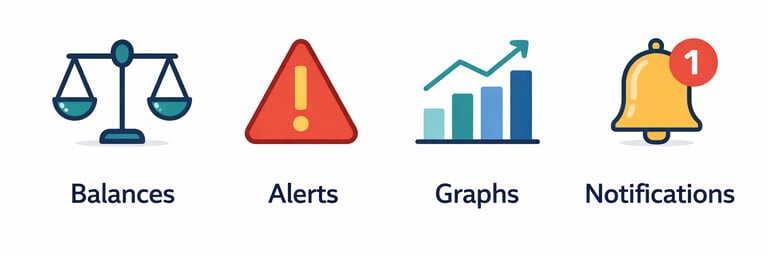
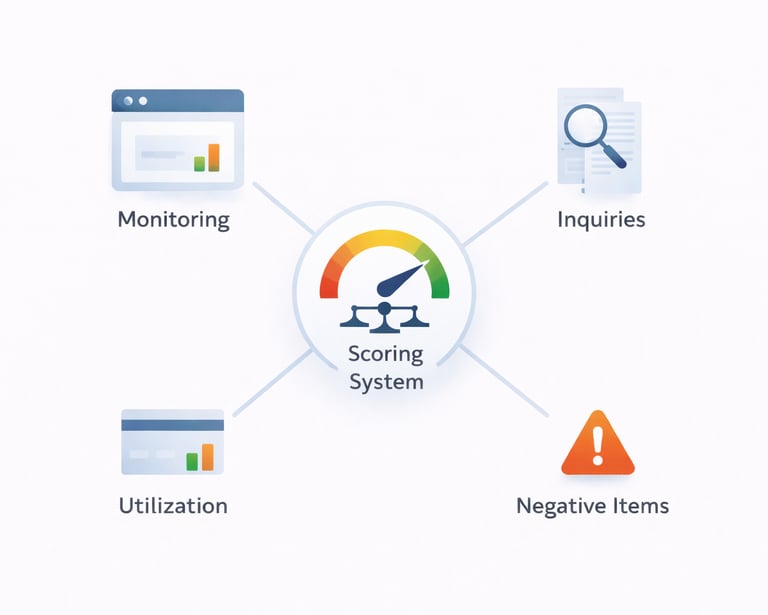
Credit monitoring tools are a window into the credit scoring system — they provide visibility into reported data such as balances, limits, inquiries, negative items, and calculated scores, allowing individuals to observe how credit information appears and changes over time.
Rather than influencing credit scores directly, these tools reflect how data is reported, updated, and interpreted within scoring models.
This page explains how monitoring tools work, what they typically display, why scores and data can differ across tools, and how monitoring fits into the broader credit data system — without offering advice, services, or guarantees.
This page is part of the CreditPatterns.com Credit Education Framework, a structured system explaining how credit data is interpreted across scoring models.
Who This Page Is For?
This page is designed for:
Individuals who want to observe their reported credit data over time
People reviewing credit reports and scores from different sources
Those exploring tools that provide visibility into credit information
Anyone seeking factual information about credit monitoring and related tools
This page provides educational context only, not recommendations or strategies.
In This Guide
What is credit monitoring?
How credit monitoring tools work
Common types of monitoring tools
What monitoring tools typically show
Why scores and data differ across tools
How monitoring relates to scoring models
Data lag vs real-time perception
Common observable patterns in monitored data
Frequently asked questions
What Is Credit Monitoring?
Definition
Credit monitoring is the process of regularly reviewing credit reports and scores to observe reported information, such as balances, limits, inquiries, negative items, and calculated scores.
Monitoring tools provide access to certain credit data from one or more bureaus and often include alerts when changes are detected.
Featured Snippet:
Credit monitoring is the process of regularly reviewing credit reports and scores to observe reported information, such as balances, limits, inquiries, negative items, and calculated scores.
How Credit Monitoring Tools Work
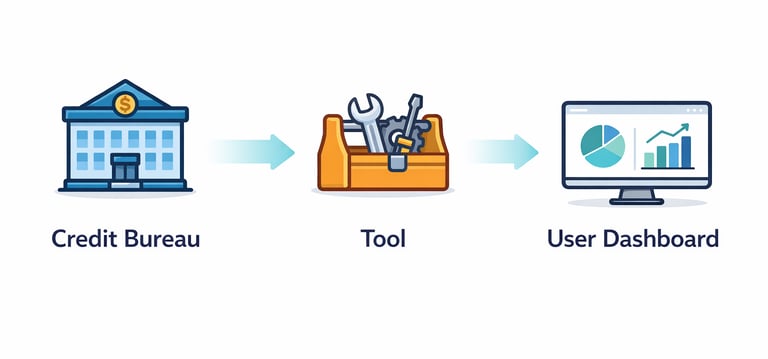
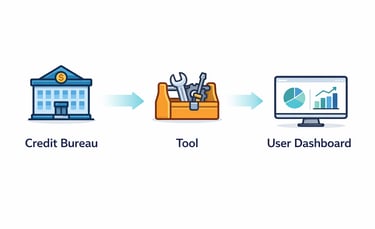
Credit monitoring tools connect to credit bureau data (Equifax, Experian, TransUnion) and provide access to:
Reported credit information
Calculated scores (VantageScore, FICO, or model-based estimates)
Alerts for changes in reports or scores
Tools vary in:
Which bureaus they access
Which scoring models they use
Frequency of updates
Additional features (such as identity monitoring or alerts)
It’s important to understand that these tools display data — they do not control or modify it.
Common Types of Monitoring Tools
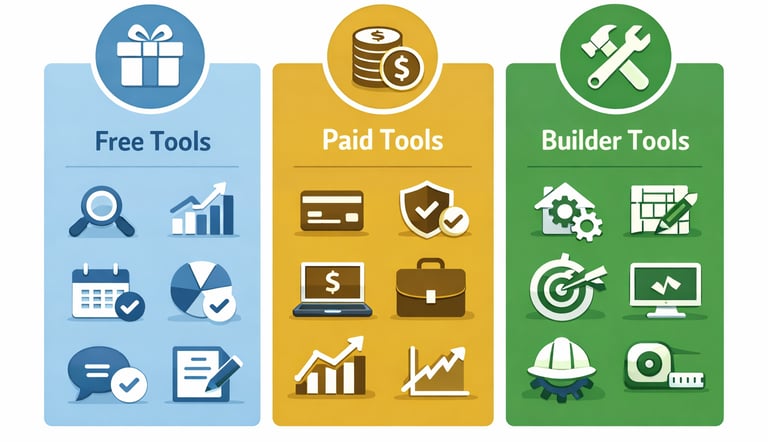
Free monitoring services (e.g., Credit Karma, Credit Sesame, WalletHub):
Provide access to scores and reports from one or more bureaus, often using VantageScore models.Paid monitoring services (e.g., myFICO, Experian IdentityWorks):
Provide official FICO scores, three-bureau reports, and additional features such as identity monitoring.
Each type serves a different purpose within the broader ecosystem of credit visibility.
What Monitoring Tools Typically Show
Most monitoring tools display:
Reported balances and credit limits (utilization)
Payment history and negative items
Inquiries (hard and soft)
Calculated scores (VantageScore, FICO, or estimates)
Alerts for changes in reports or scores
These elements reflect what has been reported to credit bureaus — not necessarily real-time financial activity.
Why Scores and Data Differ Across Tools
One of the most common points of confusion is seeing different scores across different platforms.
This happens because:
Different tools use different scoring models (FICO vs VantageScore vs proprietary models)
Different bureaus provide different data snapshots
Updates occur at different times across platforms
Some tools display estimates rather than lender-used scores
These differences are not errors — they reflect how credit data is modeled, sourced, and timed.
How Monitoring Relates to Scoring Models
Monitoring tools display outputs generated by scoring models, but they do not influence those models.
The score you see depends on:
The scoring model used (FICO vs VantageScore)
The bureau providing the data
The timing of the data snapshot
Monitoring provides visibility into how your credit data is being interpreted — but it is not part of the scoring process itself.
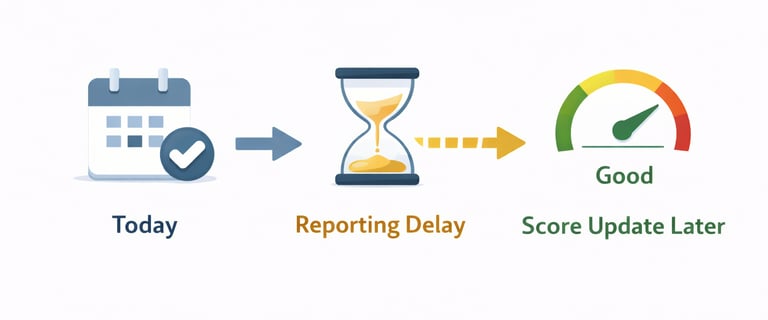
Data Lag vs Real-Time Perception
A key concept in understanding monitoring tools is data lag.
Credit data is not real-time:
Lenders typically report data on monthly cycles
Credit bureaus update reports after receiving that data
Monitoring tools display the most recent available snapshot
This means:
A recent payment may not appear immediately
A balance reduction may not reflect until the next reporting cycle
Different tools may show slightly different versions of the same data
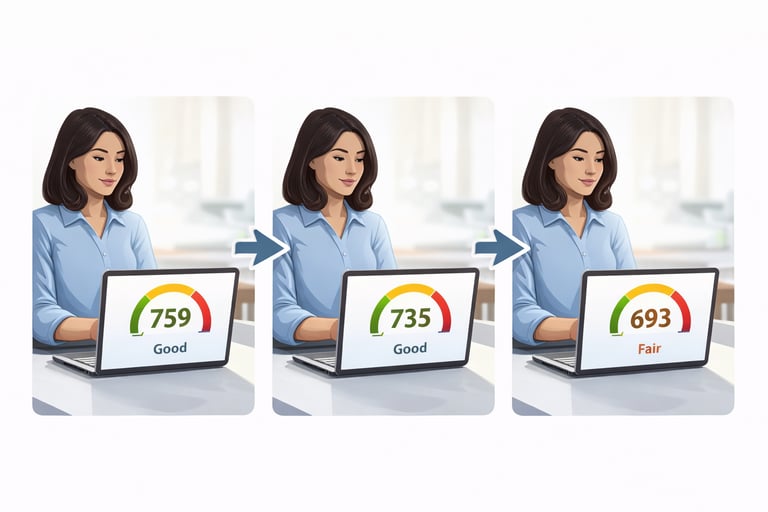
This delay often creates the perception that scores are changing unpredictably, when in reality they are reflecting timing differences in reported data.
Common Observable Patterns in Monitored Data
Individuals who monitor their credit over time often observe patterns such as:
Utilization changes based on reported balances and limits
New inquiries appearing after credit applications
Negative items remaining visible for defined reporting periods
Score fluctuations tied to reporting cycles and timing
These patterns reflect how credit data moves through the reporting system and is interpreted by scoring models.
🔍 Choosing the Right Way to Monitor Your Credit
Credit monitoring tools serve different purposes depending on what you are trying to observe.
Some individuals simply want to view their reported credit data. Others want to track changes over time, while some are exploring what financial options may be available based on their current profile.
Understanding these differences can help clarify which type of tool aligns with what you’re looking to observe.
🟢 Viewing Your Credit Profile
For individuals who want to see their reported credit data — including balances, limits, inquiries, and negative items — a monitoring tool can provide a direct view into how this information appears across your credit file.
Credit Monitoring Tool
Review your full credit profile, including reported balances, account activity, and credit data
👉 View your full credit profile and reported data Affiliate disclosure
🟣 Tracking Changes Over Time
Because credit data updates in cycles, some individuals choose to track how their credit profile changes over time, including score fluctuations, reporting updates, and account activity.
Observing these patterns can help illustrate how scoring models respond to different types of data updates rather than focusing on a single moment.
Advanced Credit Tracking Tool
Track score changes, reporting updates, and account activity over time
👉 Track your credit changes and score behavior over time Affiliate Disclosure
These tools allow observation of reported data, but exact scores and data may vary depending on the model, bureau, and timing of updates.
How This Fits Into the Full Credit System
Monitoring tools are not a separate system — they are a view into the broader credit system.
They reflect how data from:
Credit utilization
Payment history
Credit age
New credit activity
- is reported and interpreted.
👉 See the full system in the Complete Credit Scoring Education Framework
👉 See how utilization appears in monitored data in Credit Utilization & Credit Card Behavior
👉 See how negative items are tracked in Credit Report & Negative Items Framework
👉 See how inquiries appear in Credit Inquiries & New Credit Activity Framework
Key Takeaway
Credit monitoring tools provide visibility into reported credit data over time. They allow individuals to observe how balances, limits, inquiries, and negative items appear within credit reports, but the scores and data displayed may vary depending on the scoring model, bureau, and timing of updates.
Frequently Asked Questions (FAQ)
What is credit monitoring?
Credit monitoring is the process of regularly reviewing credit reports and scores to observe reported information over time.
How do credit monitoring tools work?
They connect to credit bureau data and display reported information, calculated scores, and alerts for changes.
What do monitoring tools typically show?
Balances, limits, inquiries, negative items, and calculated scores.
Are free monitoring tools accurate?
They display real reported data, but scores may vary depending on the model used.
Do monitoring tools affect credit scores?
No — they only display data and calculated scores.
Why do scores differ between tools?
Different models, bureaus, and update timing create variations.
How often do monitoring tools update?
Typically daily to weekly depending on the tool and bureau.
Can monitoring tools show all three bureaus?
Some do, while others show one or two.
Are monitoring tools the same as credit repair services?
No — monitoring tools display data, while credit repair services attempt to change reported data.
← Previous Step: Credit Score Changes & Fluctuations
🔗 Explore the Credit Education Framework
This page is part of a connected system of educational resources:
Each section explains one component of how credit scoring models interpret real-world credit data.
Final Disclaimer
THIS ARTICLE IS PROVIDED FOR GENERAL EDUCATIONAL PURPOSES ONLY AND IS NOT CREDIT REPAIR ADVICE, CREDIT REPAIR SERVICES, FINANCIAL ADVICE, OR PERSONALIZED GUIDANCE. CreditPatterns.com DOES NOT OFFER CREDIT REPAIR SERVICES, DISPUTE CREDIT REPORT ITEMS, OR PROVIDE ANY FORM OF CREDIT IMPROVEMENT ASSISTANCE. ACCURATE NEGATIVE INFORMATION CANNOT BE REMOVED FROM CREDIT REPORTS UNDER FEDERAL LAW. FOR QUESTIONS ABOUT YOUR PERSONAL CREDIT REPORT OR SCORE, CONTACT THE CREDIT BUREAUS (EQUIFAX, EXPERIAN, TRANSUNION) DIRECTLY OR CONSULT A QUALIFIED PROFESSIONAL.